Irene–Román relationship
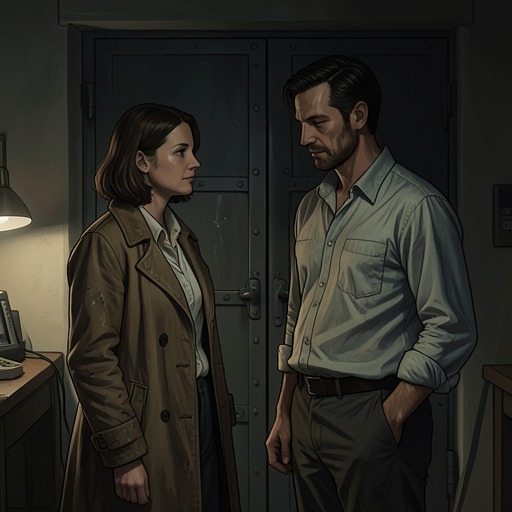
Gente que viene y ¡Bah!Irene–Román relationship is an antagonistic post-marital relationship in which disputes over their son, Fin, become entangled with Román’s campaign to remove Irene from office. After Fin’s motocross accident, Román tries to dictate what happens to their son; when Irene resists, he threatens her custody and then her mayoralty. He subsequently follows through politically, giving a reporter information used in an attack on Irene’s biomass project. The relationship’s defining pattern is this movement from family confrontation to public consequence.
Family History and Stakes
The available scenes establish Irene and Román as former spouses and the parents of Fin, who is fifteen during the hospital confrontation. They are no longer acting as a united couple, but their son keeps them in direct conflict over the responsibilities and authority each claims as a parent. The evidence does not detail the history of their marriage or its end; instead, it shows the relationship under pressure at the point where Fin’s safety and Irene’s demanding public role collide.
The dispute takes place amid a wider family strain. Irene’s sister Bea has returned from Madrid, and a conflict over timber and a proposed treehouse threatens to become public just as Irene is trying to advance the San Esteban Biomass Plant. Irene tells Bea that she has spent two years organizing the forests and persuading people of the benefits of green energy. She fears that a scandal involving her own family could undo the project and give her political opponents the opening they are waiting for. Román’s hostility therefore reaches beyond private disagreements: it intersects with a political initiative on which Irene has built much of her work as mayor.
The Hospital Confrontation
Román enters the hospital room after Fin has been taken for scans to rule out injuries. Bea assures him that Fin is all right; Román’s first response is to declare that the motorcycles must end. Irene rejects his attempt to decide the matter immediately. She says they should not make a decision while emotions are running high, treating Fin’s future as something that cannot simply be settled by his father’s anger at the accident.
Román then demands a united front and threatens Irene with the loss of custody if she does not behave as a sensible mother. Irene holds her ground. She points out that Fin is fifteen and that, in any custody decision, his preference would matter; she makes clear that he wants to live with her. The exchange exposes a sharp difference in how the parents frame their authority. Román invokes custody as leverage, while Irene answers by emphasizing their son’s age and wishes.
The argument escalates when Román accuses Irene of neglecting Fin. He acknowledges that he cannot simply take custody away from her, but says he can force her to spend all her time with their son. His next threat makes the political dimension explicit: he will use every effort to drive her out of the mayor’s office. Irene has been shaken and anxious, blaming herself for not giving Fin enough attention, but the confrontation restores her usual composure. Rather than submit to Román’s accusation, she answers him calmly and confidently.
From Domestic Threat to Political Attack
Román’s promise at the hospital is followed by action. A later account describes his effort to oust Irene from the municipal government as immediate, and Bea learns that Román is providing the reporter Pacheco with information. Pacheco’s article alleges that two landowners were threatened with the expropriation of their property if they refused to sell their trees to the biomass factory. The accusation turns the mayor’s environmental and development policy into a story about coercion, precisely the sort of controversy Irene fears could undermine her project.
This political attack becomes especially dangerous because Irene’s family is already caught up in a dispute over the timber. When Bea explains what has happened, Irene is distressed that her own relatives may appear to be sabotaging her. She says that the Andrada family has invested heavily in the project and recalls helping persuade Diego to pursue the power plant, not just the factory. She presents the project as an obligation to both its investors and the town, citing more than a hundred jobs at stake. In that context, Román’s assistance to Pacheco gives an existing family crisis a public and political route into Irene’s work.
Irene’s response to Bea is practical as well as angry: she tells her to speak with Débora and León so they will say nothing, while she contacts the Guardia Civil and Diego in an effort to keep the incident from becoming public. She fears that Débora might make matters worse if she believes Irene is directing the response. The episode shows how Román’s campaign operates amid a family network already full of competing loyalties, where even attempts to contain one dispute can create another.
An Unresolved Alliance of Opposition
The relationship remains adversarial in the supplied account. Román’s hospital threat is not an isolated outburst: he later provides Pacheco with information that damages Irene politically, and the reporter identifies him as a source. The novel thus links his anger over Irene’s parenting to a wider attack on her authority, without establishing that the two men’s actions have been coordinated beyond Román’s provision of information.
The conflict also resists a simple division between a private parent and a public official. Irene is criticized for being absorbed by the mayor’s office, yet the same political work is presented as a commitment she has made to the town and to the promised employment. Román uses Fin’s need for parental attention as a means of pressuring her, then threatens the office through which she pursues that public project. No reconciliation or settlement between the former spouses is shown; the relationship is left as an active contest over parenting, political power, and the consequences of Irene’s public responsibilities.